
Injectable Peptides
The new foundation of youth? Or simply grey market experimentation

This week, we are stepping into a conversation that is gaining significant traction across fitness communities, longevity circles, and social media: injectable peptides.
Peptides represent a fascinating and legitimate frontier in medicine. Some are already transformative medicines. Others are promising research candidates. The compounds currently circulating in biohacking and fitness communities largely belong to the experimental category supported primarily by animal data and limited human evidence. And they are the ones currently making noise and turning heads.
Curiosity and innovation drive medicine forward. But health optimisation is about doing what is supported, precise, and proportionate. The body is an interconnected system. When we intervene in signalling pathways, we intervene everywhere.
And that is a decision worth understanding in full!
Health
Peptides are not new
Peptides are short chains of amino acids which are the building blocks of proteins. In the body, they function as signalling molecules. They tell cells what to do. Hormones such as insulin are peptides. In fact, Insulin was the first peptide drug isolated in 1921. Today, more than 100 approved medications are peptide-based, including GLP-1 receptor agonist, aka the very famous Ozempic.
This is important context.
Peptides are foundational to our physiology. Where the area becomes more complex is in the growing market of so-called “research peptides” sold online, often labelled “for research purposes only.” Many are manufactured overseas and have not undergone formal human clinical trials.

One of the most talked-about peptides right now is BPC-157.
It’s a small protein fragment originally found in the stomach. In the body, it appears to play a role in protecting and repairing tissue, particularly in the gut lining. Most of what we know about BPC-157 comes from animal studies. In these studies, researchers have observed signs that it may:
Support tissue repair
Encourage new blood vessel formation
Reduce inflammation
Improve healing in muscle, tendon and ligament injuries
That sounds promising. But here’s the important context: out of hundreds of published papers, almost all have been done in animals. Only one small human study exists. In that study, 12 people with chronic knee pain were treated, and seven reported improvement lasting more than six months.
That’s interesting but it’s not enough to establish safety, ideal dosing, or long-term effects. At this stage, we simply don’t have strong human data.
We do not yet have robust data on optimal dosing, long-term safety, frequency of administration, or systemic consequences. We know peptides circulate; they are not targeted to one tissue. Growth signalling pathways do not exist in isolation. In Medicine 3.0, we prioritise proactive, data-informed health decisions. And at present, the data for most grey-market injectable peptides remains preliminary.
Wellness
Optimisation culture is accelerating this trend
High-level athletes have always searched for tools that enhance recovery and reduce downtime. Regenerative medicine research has explored peptides as potential adjuncts in joint injuries and osteoarthritis. In controlled environments, that research continues.
But the current surge extends well beyond elite sport. Search volume for BPC-157 reached record highs in 2024. Social media views are in the tens of millions. Online peptide communities have grown rapidly.
The appeal is clear: a compound that promises faster healing, improved metabolism, better sleep, and enhanced resilience, all at the level of cellular signalling. It fits neatly into modern optimisation culture.
At the same time, it’s essential to distinguish between experimental peptides and approved peptide therapeutics.
GLP-1 receptor agonists such as Ozempic and Mounjaro mimic endogenous GLP-1, a hormone released after eating. They have undergone extensive phase I–III trials, dose-finding studies, and long-term safety monitoring before clinical approval and release to the public.
Grey-market peptides bypass this process entirely. That does not mean they will never hold therapeutic value. It means we are currently operating in a space where public enthusiasm is outpacing evidence. This results in questionable product quality, manufacturing processes and safety, that people are injecting in their body for ‘optimisation’.
Beauty
Regeneration, collagen, and the signalling paradox
The interest in peptides within beauty follows a similar thread. These small protein fragments act like messengers in the body. They help cells communicate. Some are involved in skin repair, collagen production, and calming inflammation. Others play a role in helping new blood vessels form when tissue is healing.
So when you see peptides marketed as “collagen-boosting” or “regenerative,” the idea isn’t new or innovative, it’s actually how our biology works.
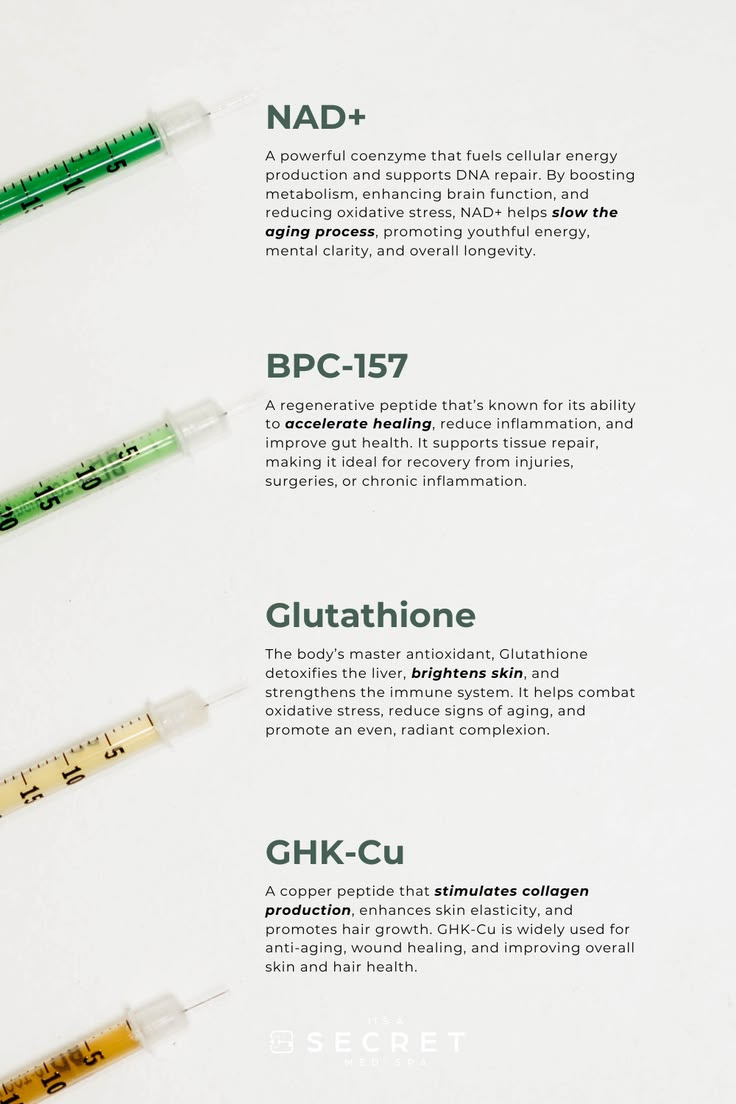
The question isn’t whether peptides influence these processes. It’s whether injecting extra amounts into the body leads to predictable, safe, long-term benefits. When you inject a peptide, it doesn’t just travel to your skin and diligently work on collagen synthesis alone.
It circulates. Like a train doing a complete loop and stopping all stations.
This means that it interacts with multiple tissues in the body, not just the area you’re hoping to improve. Do we know these interactions will be okay? How will these tissues respond to an unexpected visitor?
And ageing, as we’ve explored before, isn’t simply about a drop in collagen. It’s influenced by stress levels, inflammation, sleep quality, hormones, nutrition, and how efficiently your cells produce energy. Skin is just one reflection of what’s happening internally.
Many of our growth and repair pathways are tightly regulated as they’re designed to activate when needed and quiet down when the job is done. For the science people here, that is the negative feedback system. Could injecting these exogenous peptides be hijacking our body’s tightly regulated processes?
For now, the foundations we know support skin health: consistent sleep, stable blood sugar, adequate protein, micronutrient sufficiency, and protecting the skin barrier. These are far more predictable than experimenting with systemic injections that haven’t been properly studied in humans.