
Medicine 3.0
The paradigm shift from disease treatment to lifelong function

When I first heard of the term, Medicine 3.0, a few months ago I truthfully had no idea what it meant or was even about. If you don’t either, then after this article you will be informed!
The term comes from a way of categorising how medicine has evolved over time.
Medicine 1.0 was largely reactive: you became sick, sought care, and treatment focused on surviving the immediate problem.
Medicine 2.0 brought major advances in diagnostics, pharmaceuticals, and evidence-based guidelines, dramatically increasing life expectancy, but it still centring on managing disease once it appears.
Medicine 3.0 represents the next shift forward. It focuses on prevention, early intervention, and systems-based care, with the goal of preserving long-term function and quality of life rather than simply treating disease at its late stages. Instead of asking “How do we treat this condition?”, Medicine 3.0 asks “What patterns are developing years earlier, and how can we change their trajectory?”
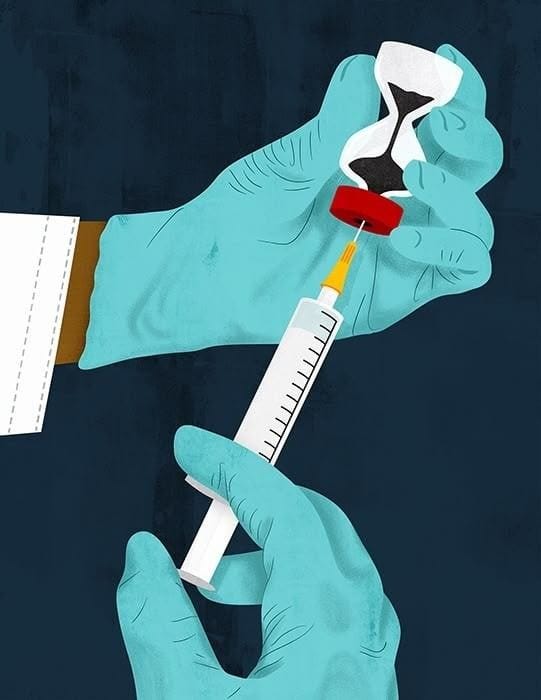
This has been the whole point of writing this newsletter! I hope I can impart on you knowledge I have gained in this area to help you change your trajectory.
Health
Preventative medicine and integrated care models
Preventative medicine is not about predicting every possible illness or medicalising your life. Nor is it a pursuit reserved for health obsessives or hypochondriacs. At its core, it is about recognising patterns early and intervening before dysfunction hardens into disease. This means learning the fundamentals of hormonal and metabolic health, tuning into the signals your body sends when it is inflamed, fatigued, or heading toward burnout, and understanding which daily behaviours support health, and which erode it. None of this is effortless.
But once you do the work, there is no going back.
One of my favourite life quotes is: the more you know, the more you can’t un-know. It holds especially true here. Sometimes I genuinely wish I could pick up a packet of crackers at the supermarket without reading the ingredient list, and promptly putting it back when a few familiar culprits appear. Awareness changes behaviour, whether we intend it to or not.
That said, preventative medicine is not about trying to control the uncontrollable. It is not a guarantee against illness, ageing, or death. The truth is, much of life remains in the hands of forces far beyond what we eat, how much we exercise, or how well we sleep. But these choices do make a difference. And if there are actions within our control that can meaningfully shift our trajectory even slightly, why would we not take them?
Traditional healthcare models tend to compartmentalise the body: blood sugar in one silo, hormones in another, mental health somewhere else entirely. This mirrors how medicine is structured, with specialties divided by organ systems. Biology, however, does not operate this way. Insulin resistance influences ovarian function. Poor sleep disrupts cortisol rhythms and thyroid signalling. Chronic stress alters gut permeability, immune activation, and even skin integrity. Integrated care models acknowledge these overlaps, treating the individual as a dynamic system rather than a collection of isolated symptoms.
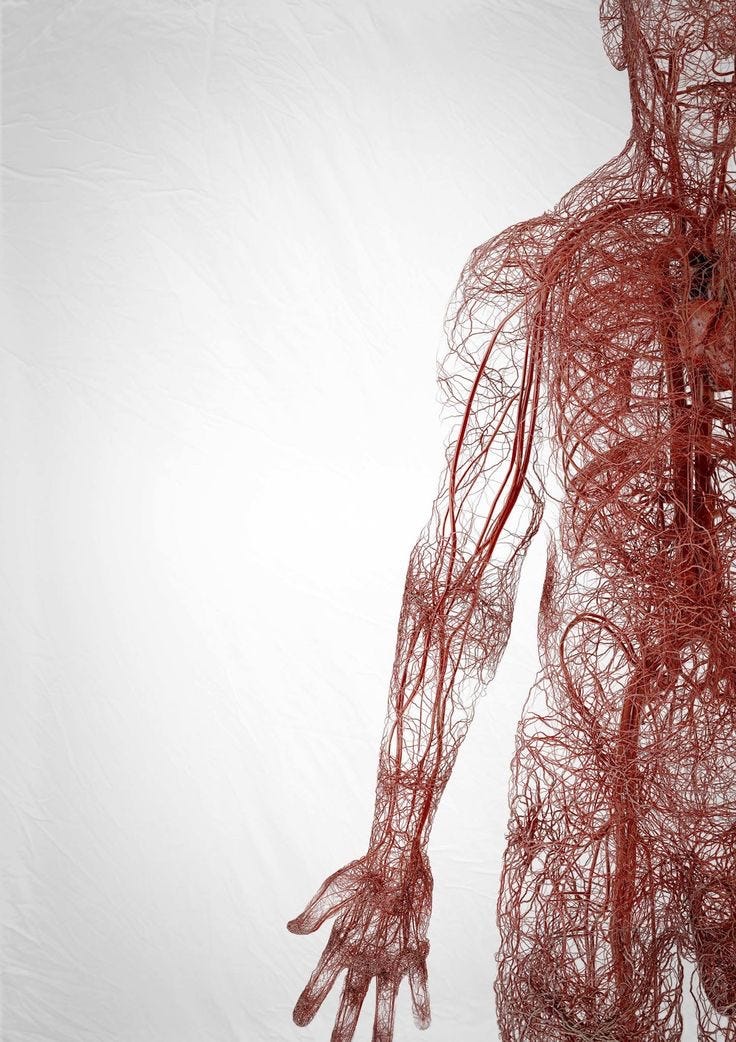
From a pharmacist’s perspective, this shift is essential. We see firsthand how medications interact with lifestyle, genetics, and environment, and how often treatment is layered on once dysfunction is already entrenched. Preventative medicine does not remove the role of pharmaceuticals; it refines it. Used earlier, more deliberately, and alongside lifestyle and behavioural interventions, medicines can be more effective and often less intensive. The goal is not to avoid treatment, but to reduce avoidable escalation by supporting the body while adaptation is still possible.
Wellness
Choices now for function and longevity later
Longevity is often framed as living longer. But the missing component is that years alone are not the metric that truly matters. What most people want is functional longevity, characterised by sustained energy, cognitive clarity, mobility, and independence across decades.
When this desire is placed alongside the reality of our ageing population, the gap becomes stark. Frailty, osteoporosis and brittle bones, arthritis, depression, dementia, and profound loneliness are now common features of later life. These realities sit worlds apart from how most of us imagine our future selves functioning. And this is precisely the gap Medicine 3.0 is attempting to bridge, not simply extending lifespan, but preserving the level of function we hope to maintain 30, 40, or 50 years from now. Because the functionality many experience in older age today looks nothing like the vitality we associate with thriving in our 20s, 30s, 40s, or even 50s.

Wellness, in the context of Medicine 3.0, is about maintaining physiological resilience: stable blood sugar regulation, preserved muscle mass and bone density, restorative sleep architecture, and a nervous system capable of flexibly shifting between stress and recovery. These are the foundations that support function when it matters most, later in life. Far more than any single supplement or protocol, these factors determine how well we age.
A quality-focused approach to longevity asks “How do I support my body so ageing unfolds with less friction?”, over “How do I slow ageing?”. The cumulative impact of daily choices ranging from meal timing, food quality, movement, stress exposure, and recovery, all compound over time. Together, they shape whether ageing feels gradual or you get hit by a bus!
Beauty
Ageing is a biological process, not a flaw
Ageing is frequently framed as a cosmetic problem to be corrected. In reality, it is a biologically programmed process shaped by inflammation, oxidative stress, hormonal transitions, and the body’s capacity for cellular repair. Skin, like every other organ, responds to these internal conditions over time. Changes in texture, elasticity, and tone reflect systemic shifts rather than isolated surface issues.
Viewed through a Medicine 3.0 lens, the focus shifts away from erasing visible signs of ageing and toward preserving tissue health and function. Barrier integrity, microbiome balance, adequate circulation, and a lower inflammatory burden play a far greater role in how skin ages than aggressive topical intervention alone. Supporting these foundations allows skin to adapt more gracefully to time, rather than requiring constant correction.
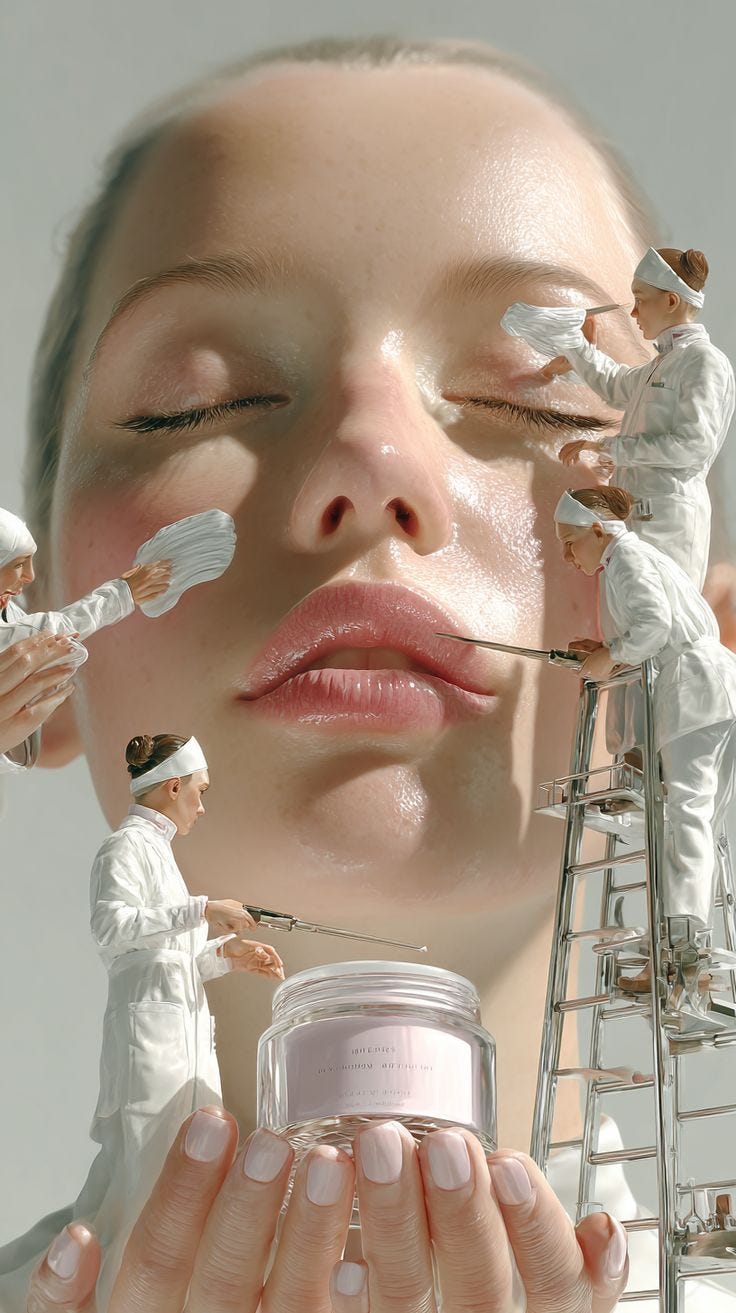
When ageing is understood as a biological process rather than a flaw, beauty becomes an extension of health rather than a separate pursuit. What we eat and drink, how well we sleep, and the level of stress we carry all leave a visible imprint on the skin. Lines and texture are not indicators of failure, but markers of lived physiology. As with longevity more broadly, the goal is not to eliminate evidence of time, but to support the systems that determine how these ageing processes unfold.