The Metabolic Thread
The cost of good habits is in the present. The cost of bad habits is in the future.

Metabolic health is often discussed in fragments, blood sugar here, weight there, inflammation somewhere else, however, it should actually be discussed as a whole as it is indeed an integrated system. At its core, metabolic health reflects how efficiently the body converts food into energy, responds to hormonal signals, and adapts to changing demands across the day.
Optimal metabolism looks like steady energy levels, hunger cues, stable mood and faster recovery. On the contrary, when it is dysregulated, cravings intensify, fatigue persists and sleep is fragmented. This week, we explore what metabolic health actually means and mindful actions you can take to support your metabolic health.
Health
Why your glucose levels matter
Insulin sensitivity describes how well your body responds to insulin, the hormone that helps move glucose from your bloodstream into your cells to be used as energy. When this process is working efficiently, blood sugar remains relatively stable with minimal effort from the body. When it is not, the system compensates by producing more insulin, more often. This can happen steadily for years, long before the problem appears in a blood test.
What matters just as much as average blood sugar is how much it fluctuates throughout the day. Frequent sharp rises in glucose, followed by sudden drops, place stress on the body. These swings can show up as fatigue, cravings, brain fog, irritability, or feeling “off,” even in people who are otherwise considered healthy. In other words, it is possible to feel the effects of unstable blood sugar long before it appears on paper.
Over time, repeated glucose spikes increase insulin demand and contribute to low-grade inflammation. They also reduce the body’s ability to adapt between different fuel sources. This adaptability is known as metabolic flexibility, which is the ability to comfortably switch between using carbohydrates and fat for energy, depending on what the body needs in that moment.

When metabolic flexibility is at its best, energy is steadier, hunger cues are more reliable, and the body is less dependent on constant food intake. The most important thing to note though is that this is achieved through patterns that reduce unnecessary glucose swings such as moving regularly, prioritising sleep, eating enough protein, and building meals that slow glucose absorption rather than eliminate carbohydrates altogether.
Wellness
Simple Ways to Support More Stable Blood Sugar
Small, consistent behaviours can significantly reduce glucose spikes across the day. The following principles focus on stabilising your glucose levels:
Build meals around protein first
Protein slows digestion and reduces the speed at which glucose enters the bloodstream, supporting steadier energy and satiety

Add fibre wherever possible
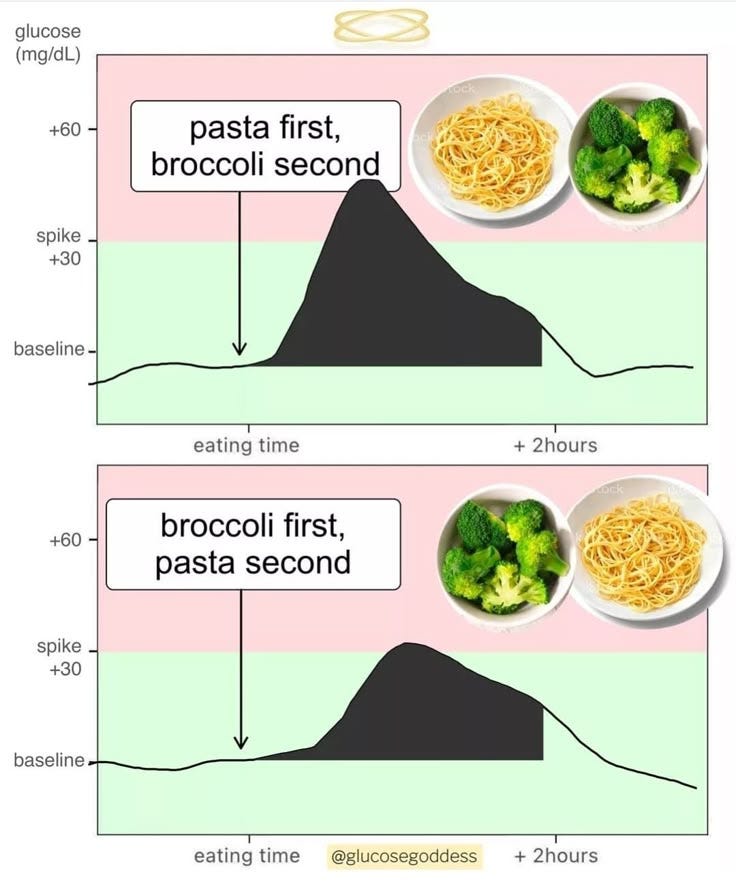
Fibre, particularly from vegetables, legumes, and whole foods, acts as a natural buffer, flattening post-meal glucose rises. The below diagram is taken from Glucose Goddess and depicts the effects of eating vegetable first over carbohydrates…
Pair carbohydrates with fats or protein
Carbohydrates are best tolerated when eaten alongside other macronutrients, rather than on their ownEat savoury before sweet
Starting meals with protein, vegetables, or fats can significantly blunt the glucose response to carbohydrates eaten laterAvoid starting the day with sugar alone
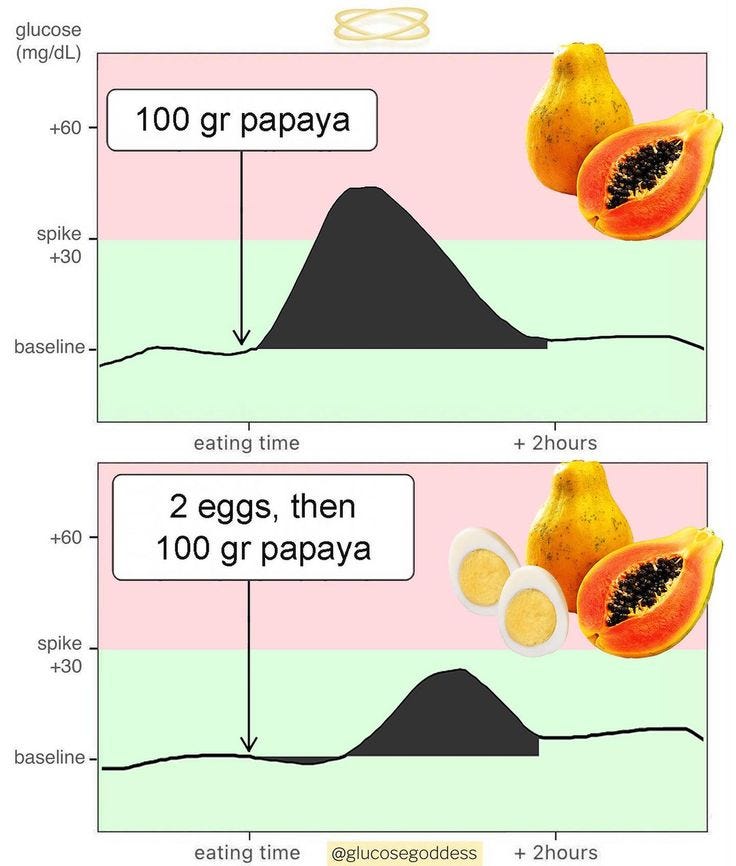
Sweet breakfasts without protein or fibre can drive large glucose spikes and crashes early in the day. The below diagram is taken from Glucose Goddess and depicts the effects on blood glucose when starting breakfast with protein over sugar.
Move after meals
Gentle activity such as walking helps muscles absorb glucose without relying solely on insulin.Reduce liquid sugars
Sugary drinks and juices are rapidly absorbed and offer little buffering, making them more likely to spike blood sugar.Space meals consistently
Predictable eating patterns support hormonal regulation and reduce the stress response associated with erratic intake.Support sleep and circadian rhythm
Poor sleep increases insulin resistance and glucose variability, even with unchanged food intake.Aim for progress, not perfection
Occasional spikes are part of normal physiology. What matters is reducing chronic volatility, not eliminating pleasure or flexibility.
(The above list is adapted from the 10 glucose hacks developed by Glucose Goddess. If you are interested in this space, I highly recommend you follow her on Instagram @glucosegoddess)
Sample diet plan:
While the glucose goddess doesn’t mandate a strict diet, she often shares flexible guidelines for a glucose goddess meal plan. A typical day might look like this:
Breakfast (the Glucose Goddess breakfast)
Example: A veggie omelette with spinach, mushrooms, and cheese, paired with avocado on the side
Why it works: Protein, fat, and fibre slow the absorption of any carbs you do eat and help you avoid a morning glucose spike

Lunch
Example: A salad loaded with mixed greens, grilled chicken or tofu, olives, feta cheese, and a vinaigrette dressing
Why it works: High in fibre and protein, moderate in healthy fats, low in refined carbs
Dinner
Example: Salmon or lean beef with roasted vegetables (zucchini, capsicum, broccoli), and a small serving of whole grains e.g., quinoa or brown rice
Why it works: Balanced macronutrients and plenty of fibre to slow digestion

Snacks
Example: Greek yoghurt with berries, a handful of nuts, or carrot sticks with hummus
Why it works: Low-sugar, high-protein or high-fibre snacks that keep glucose stable
Beauty
Blood sugar levels and skin – what’s the link?
The skin is often where metabolic health reveals itself first. Before blood tests confirm it, subtle changes in texture, elasticity, tone, and sensitivity can reflect what is happening beneath the surface.
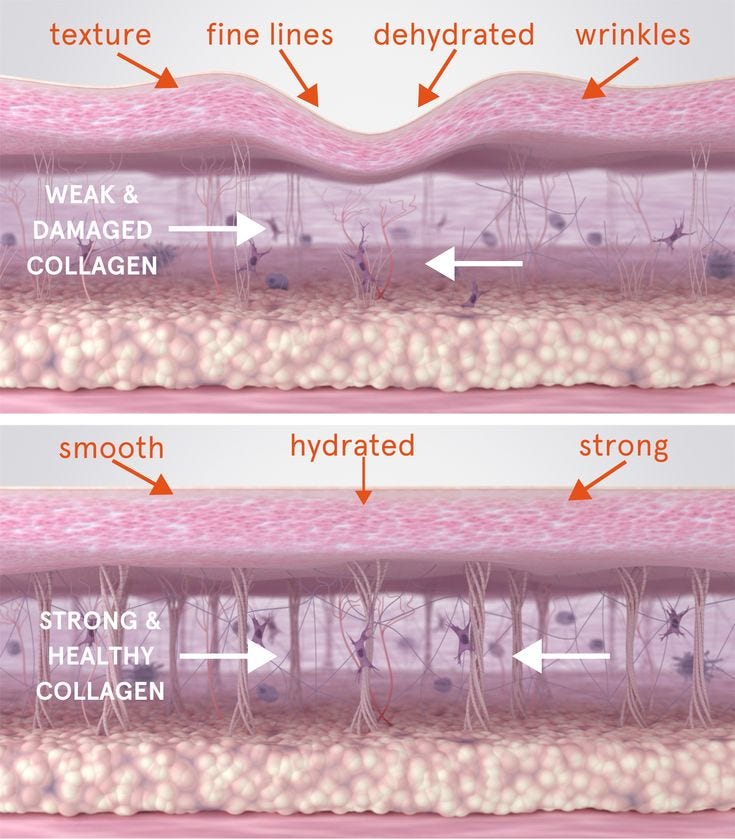
One key process involved is glycation. When glucose levels rise sharply and frequently, excess glucose can bind to structural proteins in the skin such as collagen and elastin. Over time, this leads to the formation of advanced glycation end products, which stiffen these fibres and reduce their ability to stretch, repair, and renew. The result is skin that appears less resilient, slower to recover, and more prone to premature ageing.
Glucose variability also feeds low-grade inflammation. Inflammatory signalling disrupts the skin barrier, impairs healing, and increases oxidative stress, contributing to dullness, redness, breakouts, and heightened sensitivity. Importantly, these changes can occur even in people who are otherwise “healthy,” particularly when blood sugar fluctuates repeatedly throughout the day.
This is where metabolic stability becomes a beauty strategy. When glucose spikes are softened, through balanced meals, consistent eating patterns, movement after meals, and adequate sleep, the internal environment becomes more supportive of skin repair. Collagen turnover improves, inflammatory load decreases, and the skin’s barrier function strengthens.
While topical products remain important, they work best when layered onto a system that is not constantly under metabolic stress. Skin longevity is less about chasing the next active ingredient, and more about creating the internal conditions that allow the skin to age slowly, repair efficiently, and respond well to care over time.