
You Don’t Need to Do Everything
Issue 13

This week, I was reminded of why conversations around health and wellness matter so deeply.
Advances in medicine are allowing people to live longer than ever before, including those with chronic and once life-limiting conditions. With that progress comes a new challenge: learning how to support health, function, and quality of life over a longer lifespan.
In many ways, this is the same journey we are all on.
Whether longevity is driven by medical breakthroughs or by modern living, the question becomes less about how long we live, and more about how well we live. And that is the true purpose of wellness.
Not as a luxury or a privilege, but as alignment with the body’s fundamental needs of sleep, nourishment, movement, recovery, and stability.
Which brings us to an important truth: optimising health isn’t about doing everything. It’s about doing what actually supports the system you’re living in.

Health
When More Isn’t Better
At pharmacy school, we were taught a principle that applies far beyond prescription medications: more intervention does not always equal better outcomes.
Polypharmacy (taking more than 5 medicines at once) is a recognised risk in healthcare. So, why wouldn’t the same concept apply for lifestyle interventions? Supplements, fasting, training schedules and diet changes incorporated at once often increases stress on the body rather than resilience.
From a physiological standpoint, your body has a finite capacity to adapt at any given time. Which is what makes our bodies so incredible, however it can be too much sometimes when the way it has always “worked” is suddenly altered. This is why people often feel worse when they “go all in” on health changes. Think of the state of shock the body goes in when you take away coffee and add a high-intensity workout to someone’s routine who had 3 coffees a day and has never worked out before?
The evidence consistently shows that a small number of fundamentals drive the majority of health outcomes:
Adequate sleep
Stable blood sugar (a whole topic we have not even dived into yet – coming soon!)
Regular movement
Reduced chronic stress load
If these foundations are unstable, adding more on top rarely delivers results. A more effective approach is to choose one area to work on at a time, for example, improving sleep consistency or regularising meals, and give it a few weeks before introducing anything new.
Moving slowly isn’t a setback. It’s how changes become habits that actually last.
Wellness
Choosing What You Need
One of the most helpful mindset shifts is moving from “What should I add?” to “What deserves my energy right now?” or “What do I need right now?”
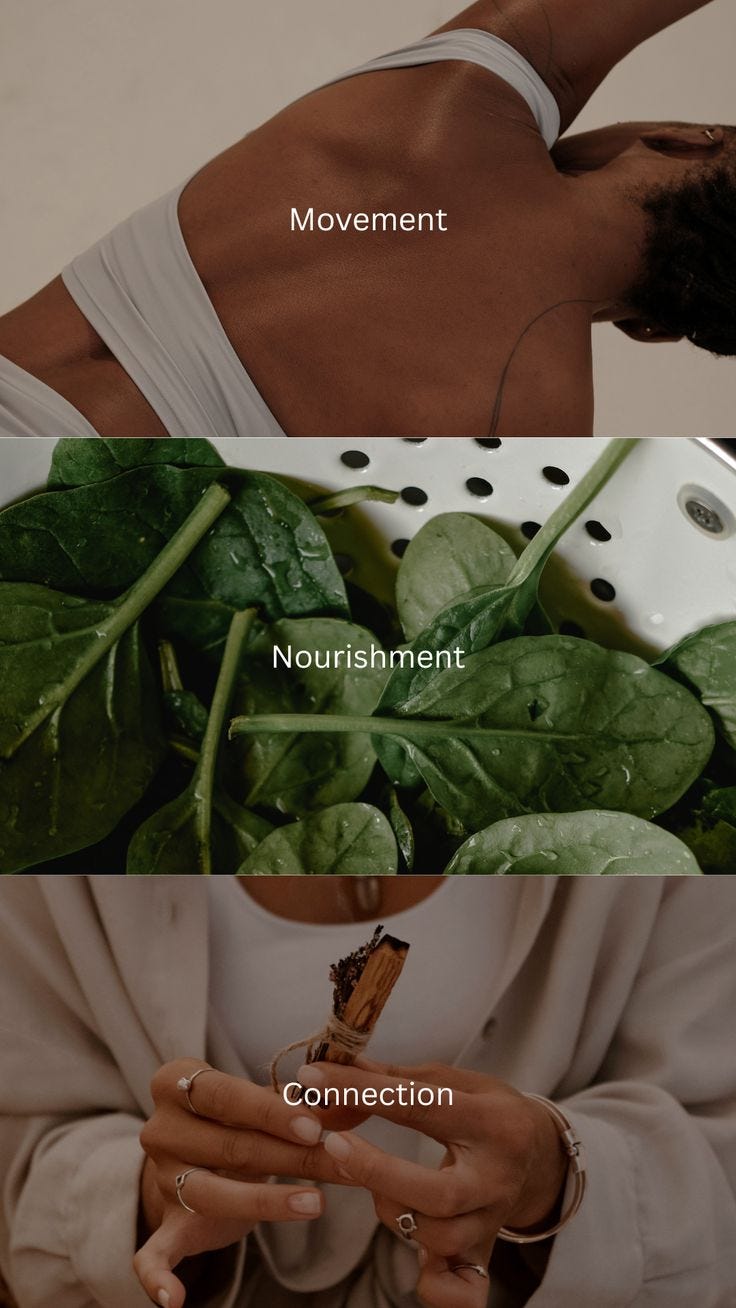
Life moves quickly, and our responsibilities evolve over time. As they do, we adjust how we show up, often without realising how much our health needs shift too. Adapting means that at different points in life, different pillars carry more weight. During periods of high cognitive load, poor sleep, or emotional stress, the nervous system can become the limiting factor. During other seasons, nutrition or movement may take priority. A simple, evidence-based way to approach this is to choose one anchor habit for a 4–6 week period:
Improving sleep timing
Walk daily
Eating balanced meals at regular intervals
Reducing decision fatigue.
The hardest part won’t be implementing the habit. It will be maintain it. You feel better when your healthy actions become habits, and those habits support capacity rather than compete for it.
Beauty
The Summer Reset
As the seasons change and for those of us living in the southern hemisphere, summer is here and this is a good moment to check in on your skincare routine! It is not to add more, but to make sure it still suits the season ahead.
Start with a routine reset. If you’re using multiple exfoliants or strong actives several times a week, consider spacing them out. Warmer weather, sun exposure, and sweating can make skin more reactive, and overdoing actives at this time of year often leads to irritation rather than results. Tip: if you are using vitamin A, retinol or other derivatives, AHA/BHA, a reminder that these chemicals do make your skin more sensitive to sunlight. You must ensure sun protection (sunscreen, hat, shade).
Next, look at hydration and barrier support. Swap out the heavy winter creams for lighter moisturisers that still contain barrier-supporting ingredients such as glycerin, ceramides, or fatty acids. These help the skin hold onto water without feeling greasy in the heat. Tip: swap creams for gels! Gel form moisturisers are your summer skincare staple. Save the heavy creams for winter.
Sun protection becomes non-negotiable. Choose a sunscreen you will actually use daily. Think about the texture of the sunscreen, how it behaves on your skin and the finish. Consistency is far more protective than the “best” formula that sits unused. Tip: check here that the sunscreen you are using is not listed as one of the recently recalled products due to having lower than claimed SPF levels.
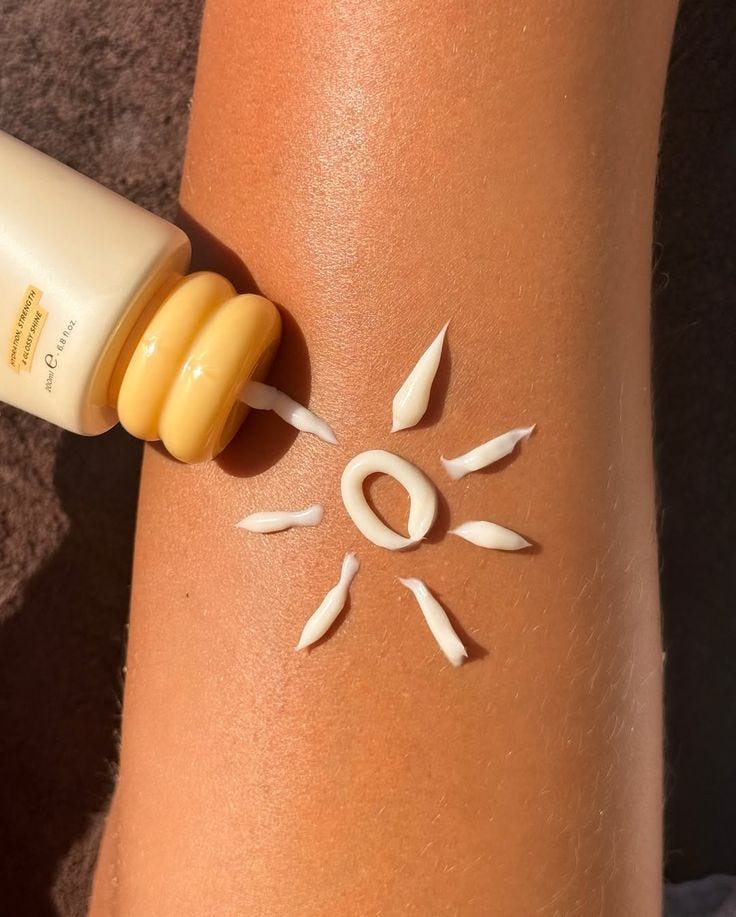
Finally, pay attention to how your skin behaves. Increased redness, stinging, or breakouts are signals to scale back, not push harder. Skin often performs best when it’s given fewer variables and more time to adapt.
Health, wellness, and beauty are not separate pursuits. They are expressions of the same system.
As this year comes to a close, consider this an invitation to release the pressure to optimise everything at once and instead focus on what will quietly compound in your favour.
Next week, we’ll reflect on how to recognise what actually made a difference this year, and how to carry that clarity forward into your next chapter of wellness and health optimisation.